Blockchain Development Services Built for Scale, Security, and Business Impact
Updated















Driving real-world value with enterprise-ready blockchain solutions
Private & Public Blockchain Development
Smart Contract Engineering
Crypto Wallet Development
Asset Tokenization Platforms
Blockchain Talent & Delivery Teams

Why enterprises choose Sthenos for blockchain development
Business & Use-Case Discovery
We begin by understanding your business objectives, operational challenges, and compliance requirements. This ensures blockchain is applied where it delivers measurable impact, not complexity for its own sake.
Rapid Proof of Concept
Our teams quickly build functional blockchain prototypes to test feasibility, performance, and user adoption. This helps stakeholders make informed decisions before committing to full-scale development.
Secure Production Deployment
We engineer production-ready blockchain systems with strong security controls, fault tolerance, and governance models. Every solution is designed to operate reliably in real-world enterprise environments.
Network & Ecosystem Enablement
We help design and manage blockchain ecosystems that involve multiple stakeholders, partners, and systems. Our focus is on interoperability, transparency, and smooth collaboration across the network.
Automated Delivery & Lifecycle Management
Using modern DevOps and CI/CD practices, we enable faster releases, consistent quality, and easier maintenance. This allows blockchain platforms to evolve alongside business needs without downtime or risk.
Our blockchain development services cover the five service cards above: private and public blockchain development, smart contract engineering, crypto wallet development, asset tokenization platforms, and blockchain talent and delivery teams. The sections below define the technology in the words of NIST, the US National Institute of Standards and Technology, set out the test for whether a distributed ledger is genuinely the requirement, and cover how an engagement runs, the ways to hire, what moves the cost, what you receive and what to ask.
From private and public blockchain development to blockchain talent and delivery teams. Counted on this page.
The three network types named under Private and Public Blockchain Development above.
So blockchain is applied where it delivers measurable impact, not complexity for its own sake.
Per hour, depending on the seniority and mix of the team. The published Sthenos band.
On this page
- What a blockchain is, in NIST's words
- Where each service sits
- Permissioned or permissionless: which network suits the work
- When a distributed ledger is genuinely the requirement
- How to build a blockchain solution, stage by stage
- Ways to hire blockchain developers, compared
- What moves the cost of blockchain development
- What you receive
- What to ask any blockchain development company
- Questions buyers ask about blockchain development
- More about blockchain work at Sthenos
What a blockchain is, in NIST's words
The National Institute of Standards and Technology publishes a high-level technical overview of the technology, NIST IR 8202, and a second report, NIST IR 8301, on token design and management. Each of the four terms below is defined from those two reports, and each one is the subject of a service card on this page.
Where each service sits
The four terms stack. A network holds the ledger, smart contracts run on the network, tokens are entries in the ledger, and wallets hold the keys that control the accounts tokens are assigned to. Figure 1 places each service card on that stack, using only the words the page and the two NIST reports already use.
Figure 1. The four layers of a blockchain system, and the service on this page that works on each
Caption: the four layers and their definitions come from NIST IR 8202 and NIST IR 8301, quoted in the section above; the six service names are this page's own service and strategy cards. The order of the stack follows the definitions. Nothing in the figure is a measurement.
Permissioned or permissionless: which network suits the work
NIST IR 8202 categorizes blockchain networks by their permission model, which determines who can maintain them, for example who can publish blocks. In its own simple terms, a permissioned network is like a corporate intranet that is controlled, and a permissionless network is like the public internet, where anyone can participate. The private, consortium and public networks named in the first service card above fall on either side of that line.
The two permission models, side by side
Permissioned
Private and consortium networks- Only particular users can publish blocks.
- Often deployed for a group of organizations and individuals, typically called a consortium.
- Identity is established to join, and publishing rights can be revoked if a member misbehaves.
- Design questions include which entity or entities will operate and govern the network.
Permissionless
Public networks- Anyone can publish a new block, without permission from any authority.
- Any user can read and write to the ledger.
- Often open source software, freely available to download.
- Often uses a consensus model, such as proof of work or proof of stake, so malicious users cannot easily subvert it.
When a distributed ledger is genuinely the requirement
Our custom software development page sells blockchain only where a distributed ledger is genuinely the requirement rather than the vocabulary, and the discovery card above exists so blockchain is applied where it delivers measurable impact. NIST makes the same point: a better approach is to first understand the technology and where it fits, then identify the systems that may fit it. NIST IR 8202 lists the features that suggest a blockchain may be suitable:
- Many participants
- Distributed participants
- A want or need for the lack of a trusted third party
- A workflow that is transactional, such as transfers of digital assets or information between parties
- A need for a globally scarce digital identifier
- A need for a decentralized naming service or ordered registry
- A need for a cryptographically secure system of ownership
- A need to reduce or eliminate manual reconciliation and dispute resolution
- A need for real time monitoring of activity between regulators and regulated entities
- A need for full provenance of digital assets and a full transactional history shared among participants
The same report reproduces, with permission, a flowchart from the Department of Homeland Security Science and Technology Directorate. Figure 2 redraws its six questions. Five of its six alternatives are a database of some kind.
Figure 2. Does the work need a blockchain? Six questions, and what to consider when the answer is no
Caption: the six questions and the alternatives are the Department of Homeland Security Science and Technology Directorate's, as reproduced in NIST IR 8202, Figure 6, shortened for width. The caveat on question 2 is the flowchart's own: auditing use cases can continue down the yes path. Nothing in the figure is a measurement.
How to build a blockchain solution, stage by stage
The strategy cards above describe five stages, and they apply in this order. The entry point is the one set out in the contact section at the foot of this page: a call at your convenience, then a short, bounded discovery, scoped per engagement, then a costed roadmap before committing to a build. Sthenos works in two week sprints, so working software arrives every two weeks.
- Business and use-case discoveryYour business objectives, operational challenges and compliance requirements come first, so blockchain is applied where it delivers measurable impact.
- Rapid proof of conceptFunctional blockchain prototypes test feasibility, performance and user adoption, so stakeholders decide before committing to full-scale development.
- Secure production deploymentProduction-ready blockchain systems with strong security controls, fault tolerance and governance models, designed to operate reliably in real enterprise environments.
- Network and ecosystem enablementBlockchain ecosystems that involve multiple stakeholders, partners and systems, designed and managed for interoperability, transparency and collaboration.
- Automated delivery and lifecycle managementDevOps and CI/CD practices for faster releases, consistent quality and easier maintenance, so the platform evolves with the business.
Ways to hire blockchain developers, compared
The fifth service card, Blockchain Talent and Delivery Teams, puts our blockchain developers inside your own team to accelerate development and delivery. That is one of the four engagement models our software development services page publishes, and the table restates all four. Staff augmentation suits a team that already has the plan; a fixed price suits a settled specification or a discrete phase.
| Model | How it is priced | Where it fits | Where it goes wrong |
|---|---|---|---|
| Fixed price | One number for a defined scope | The specification is genuinely settled and unlikely to move | Every change becomes a negotiation, and the buffer is priced in whether you use it or not |
| Time and materials | Rate multiplied by hours actually worked | Scope will evolve, which on most real projects it does | No ceiling unless you set one deliberately |
| Dedicated team | Monthly, per named engineer | Continuous product work over quarters, not a single project | You are paying for capacity even in a slow month |
| Staff augmentation | Per person, into your existing team | You have the plan and the management, and need hands | You own the outcome, so weak internal direction shows up fast |
What moves the cost of blockchain development
Blockchain work is billed at the published Sthenos rate band, and where the scope is clear we quote a fixed price for a defined outcome, with a costed roadmap before any build starts.
Within those bands, these are the questions that change an estimate. The first comes from NIST; the rest are already published on our software development services page, and none carries a number here.
- Who operates and governs the network. In a permissioned network, NIST notes design issues over which entity or entities will operate and govern it for the intended user base.
- Whether a proof of concept comes first. A scoped prototype lets stakeholders decide before committing to full-scale development.
- How many systems it has to talk to. Every integration adds a counterparty whose availability, data quality and release calendar you do not control.
- How scarce the technology is. A rare stack narrows the pool of engineers who can be put on it, which shows up in the rate rather than in the hours.
- What happens after launch. Deployment and maintenance get sold back later when a quote stops at go-live. Get them priced up front.
What you receive
A process description says what a vendor does. This says what you end up holding.
- A written scope and a costed roadmap, before any build starts.
- A functional prototype that tests feasibility, performance and user adoption.
- Smart contracts developed and audited for reliability, gas optimization and security best practices.
- A production system with security controls, fault tolerance and a governance model.
- Working software every two weeks, and the repository and cloud accounts in your name from the first commit.
- Monitoring, maintenance and a roadmap after launch, priced up front.
What to ask any blockchain development company
These questions apply to all the blockchain development companies on a shortlist, Sthenos included. Each comes from NIST's reports or from a question our software development services page already publishes.
- Is a distributed ledger genuinely the requirement, or would a database do? Walk through the six questions in Figure 2 together.
- Permissioned or permissionless, and who will operate and govern the network?
- Where will the private keys be held: in a self-hosted wallet, with a custodian, hot or cold?
- Will any sensitive identifiers be written to the ledger? The DHS flowchart advises against writing PII to a blockchain, even encrypted.
- Who reviews the smart contract code, and can that person veto a merge?
- Who owns the code, the repository and the cloud accounts when we are done?
Questions buyers ask about blockchain development
What is a blockchain?
NIST IR 8202 defines blockchains as tamper evident and tamper resistant digital ledgers implemented in a distributed fashion, without a central repository and usually without a central authority such as a bank, company or government.
What is the difference between a permissioned and a permissionless blockchain?
Who can publish blocks. In a permissionless network anyone can; in a permissioned network only particular users can. NIST compares a permissioned network to a controlled corporate intranet and a permissionless one to the public internet.
What is a smart contract?
In NIST's words, a collection of code and data deployed using cryptographically signed transactions on the blockchain network. It is executed by nodes in the network, and the results of execution are recorded on the blockchain.
How do we hire a blockchain developer through Sthenos?
Through one of four models: a fixed price for a defined scope, time and materials, a dedicated team priced monthly, or staff augmentation, where our blockchain engineers integrate directly with your team. The table above sets out where each fits.
How much does blockchain development cost?
Sthenos rates are $150 to $250 per hour, depending on the seniority and mix of the team, and a typical project runs $50,000 to $200,000. Where the scope is clear we quote a fixed price for a defined outcome, with a costed roadmap before any build starts.
Who owns the code you write?
You do, entirely, from the first commit. The repository and the cloud accounts are in your name, with no licence back to us and no dependency on us continuing to exist.
More about blockchain work at Sthenos
Have a use case you want tested? Tell us the process, who contributes the data and who has to trust it, and you will get a straight answer on whether a blockchain fits or a database would do. Talk to our engineers.
Custom blockchain solutions
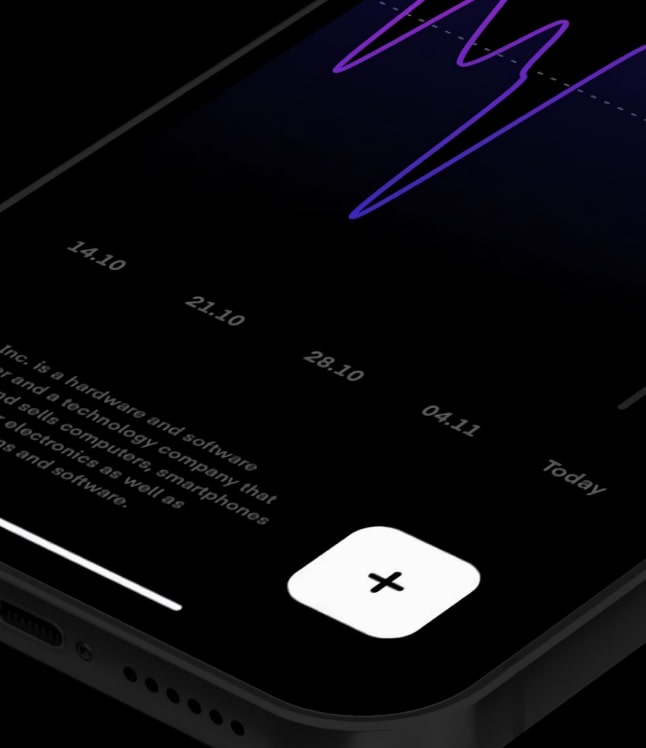
Trading blockchain platforms for the cryptocurrency marketplace
A high-performance blockchain trading platform that aggregates pricing data from multiple cryptocurrency exchanges, enabling users to compare and trade digital assets in real time. The platform was designed for scalability, transparency, and low-latency execution, helping users make faster, data-driven trading decisions while navigating volatile markets.
Building a decentralized commerce ecosystem on Ethereum
A decentralized commerce platform leveraging Ethereum smart contracts to enable secure, peer-to-peer exchange of digital assets. The solution eliminated third-party intermediaries, improved asset ownership transparency, and ensured seamless transactions across products, services, and digital experiences within a unified blockchain ecosystem.

Hyperledger Fabric–based blockchain platform for a FinTech enterprise
A permissioned blockchain solution using Hyperledger Fabric that helped a FinTech client digitize and secure high-value asset transactions. The platform enabled real-time validation, immutable audit trails, and transparent pricing while ensuring compliance, data security, and trust across all stakeholders.