End-to-End Product Development Driven by Design, Data, and CX
Updated














Product Development Services Powering Product-Led Growth
Product Assessment & Design
Custom Product Development
Application Re-Engineering
Platform Engineering
DevOps
Legacy Modernization
Quality Assurance
Product Sustenance
Team Augmentation

Our Product Development Process
Business-first product outcomes
We don’t build features for the sake of shipping. Every product decision is aligned to measurable business outcomes such as growth, efficiency, customer retention, and scalability.
Design, engineering, and data working together
Our cross-functional teams bring design, engineering, DevOps, and analytics together from day one to reduce rework, improve speed, and deliver consistent product experiences.
Scalable by default
We architect products with future growth in mind. From cloud readiness to modular design, our solutions scale seamlessly as users, data, and transactions increase.
Faster time to market
Our agile delivery models, DevOps automation, and iterative development cycles help organizations launch faster without compromising on quality or performance.
Security and reliability
We follow industry best practices for security, compliance, and performance to ensure your products are stable, secure, and production-ready from launch onward.
Long-term product ownership
Beyond launch, we stay invested in your product’s success through continuous optimization, support, and enhancements to maximize lifetime value.
Product development, as this page describes it, brings together strategy, UX, engineering and analytics to transform ideas into market-ready digital products, following an agile, outcome-focused approach. Below, the nine services are set out as the product lifecycle they cover, the process is drawn step by step, project outsourcing is set against a dedicated team, and what you receive, what moves the cost and what to ask follow.
From Product Assessment & Design to Team Augmentation, each one listed above.
From business-first product outcomes to long-term product ownership.
The band published on our About page.
Per hour, depending on the seniority and mix of the team.
On this page
- Software product development services, from assessment to sustenance
- How product development runs, step by step
- Project outsourcing compared with a dedicated product team
- What you receive from a product development engagement
- What product development costs, and what moves the number
- What to ask any product development company
- Questions buyers ask about product development
- Related pages
Software product development services, from assessment to sustenance
The nine services above follow a product through its life. Product Assessment & Design, the product design consulting part of this page, comes first: in-depth assessments of functional complexity, architecture, usability and scalability that define a clear product roadmap. Custom Product Development takes a product from initial concept to launch, with design, development, testing and deployment handled by the team. Platform Engineering, DevOps and Quality Assurance cover the platform, the delivery pipelines and product stability, and Product Sustenance keeps it stable and competitive after launch. Application Re-Engineering and Legacy Modernization are the route for a product that already exists, and Team Augmentation adds skilled developers, engineers and specialists to your in-house team.
Figure 1. The nine services, placed on the product lifecycle they describe
Caption: every service name is from this page. The four stage labels summarize each service's own description, from Custom Product Development's "from initial concept to launch" to the "beyond launch" of the page's long-term product ownership principle. The figure adds no duration.
How product development runs, step by step
The first three steps combine the contact section's What happens next with the Product Assessment & Design service. The cadence after that is the one our About page states.
- A first callWe schedule a call at your convenience.Call
- A bounded discoveryWe run a short, bounded discovery, scoped per engagement.Discovery
- Assessment and a costed roadmapAn in-depth assessment of functional complexity, architecture, usability and scalability defines a clear product roadmap, and we give you a costed roadmap before committing to a build.Roadmap
- Build in two week sprintsDesign, development, testing and deployment, with working software arriving every two weeks.Every two weeks
- A first production releaseTypically three to six months in, per our About page.Release
- SustenanceOngoing support, monitoring and enhancements keep the product stable and competitive after launch.After launch
Project outsourcing compared with a dedicated product team
Our software outsourcing services page puts the choice for a product in one sentence: project outsourcing suits a first release with a boundary you can draw; a small dedicated group suits a product that will keep changing. It sets out each model by what you keep managing and how it is billed.
The two models, side by side
Project outsourcing
Suits a first release with a boundary you can draw- You manage the specification and the acceptance criteria
- Sthenos manages the whole delivery against them
- Billed against the scope: a fixed price for a defined scope, with a costed roadmap first
- Punishes a weak specification hardest
Dedicated team
Suits a product that will keep changing- You manage priorities, the roadmap and acceptance
- The provider manages recruitment, retention and continuity
- Billed as a standing monthly commitment from the same hourly band
- Fails when nobody on your side sets direction
Staff augmentation, which this page lists as Team Augmentation, is another model that page compares: you keep managing the backlog, the architecture and the release process, and the provider handles sourcing, employment and replacement. Our IT staff augmentation page sets it out in full.
What you receive from a product development engagement
Each item below is named on this page, in its contact section, on our About page or on our software outsourcing services page:
- An assessment of functional complexity, architecture, usability and scalability
- A clear product roadmap aligned with business goals and technical readiness
- A costed roadmap before any build is committed to
- Working software every two weeks, from design through deployment
- The code from the first commit, in repositories and cloud accounts in your name
- Ongoing support, monitoring and enhancements after launch
What product development costs, and what moves the number
Our rates are $150 to $250 per hour, depending on the seniority and mix of the team, and our About page states that a typical project runs $50,000 to $200,000. Where the scope is clear we quote a fixed price for a defined outcome, with a costed roadmap before any build starts. Our software outsourcing services page describes time and materials as best for work whose shape will change as you learn, which, in its words, is most product work.
What goes into the estimate is the scope, and these are the scope lines the services on this page name:
- Which of the nine services the engagement includes
- A new product, or re-engineering and modernizing an existing one
- The transaction volumes and deployment complexity the platform must support
- The DevOps pipelines and automation to set up
- The depth of quality assurance and testing
- Sustenance after launch, and for how long
What to ask any product development company
These questions apply to any firm you are considering, Sthenos included. Each one comes from this page or another page on this site.
- Who will own the code, the repositories and the cloud accounts? Our software outsourcing page's answer is that you own the code from the first commit, with the repository and cloud accounts in your name.
- What will the product assessment look at, and what will it hand us? This page names functional complexity, architecture, usability and scalability, and a product roadmap.
- How often will we see working software? Our About page states two week sprints.
- Which model fits us, a project or a dedicated team? A project suits a first release with a boundary you can draw; a dedicated group suits a product that will keep changing.
- What happens after launch? Product Sustenance covers ongoing support, monitoring and enhancements.
- Who will actually do the work? Ask for named individuals and their availability, the advice on our IT consulting services page.
Related in this topic: vibe coding to production.
Questions buyers ask about product development
Which services does product development cover here?
On this page, nine services: Product Assessment & Design, Custom Product Development, Application Re-Engineering, Platform Engineering, DevOps, Legacy Modernization, Quality Assurance, Product Sustenance and Team Augmentation, covering a product from assessment and roadmap to launch and the support after it.
When does outsourced product development make sense?
Our software outsourcing services page answers it for founders and early stage teams: you are buying speed to a first credible version and cannot afford to hire permanently for a shape that is still moving. Project outsourcing suits a first release with a boundary you can draw; a small dedicated group suits a product that will keep changing.
Will we own the code?
Yes. You own the code from the first commit. The repository and the cloud accounts are in your name, with no licence back to us and no dependency on us continuing to exist, as our software outsourcing services page states.
How long until a first production release?
We work in two week sprints, so working software arrives every two weeks, and a first production release typically lands in three to six months, as our About page states.
How much does product development cost?
Our rates are $150 to $250 per hour, depending on the seniority and mix of the team, and a typical project runs $50,000 to $200,000. Where the scope is clear we quote a fixed price for a defined outcome, with a costed roadmap before any build starts.
Can you modernize a product we already have?
Yes. Application Re-Engineering modernizes legacy applications by re-engineering workflows, improving performance and integrating advanced features, and Legacy Modernization moves outdated systems to modern cloud-ready architectures.
Related pages
Building a product? Tell us what the first release has to do and who it is for, and we will give you a costed roadmap before any build is committed to. Talk to our engineers.
Selected Project Examples
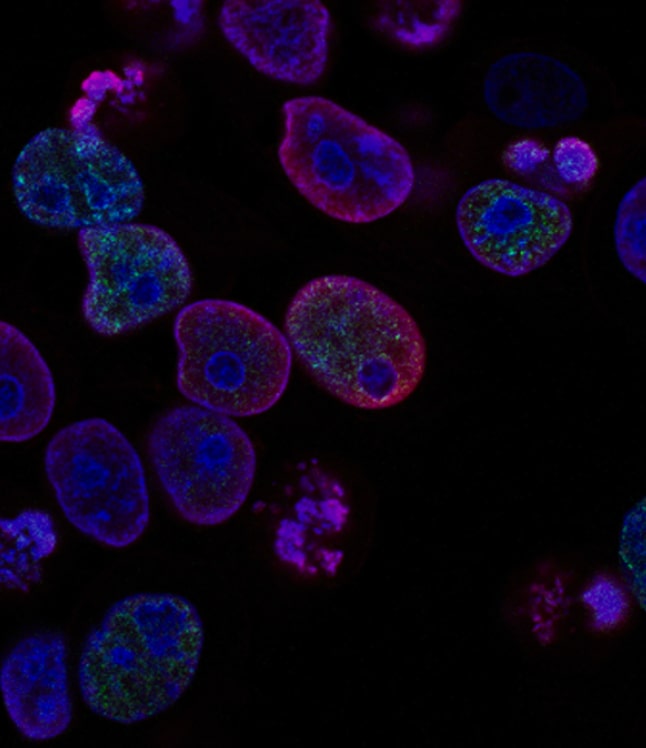
An advanced healthcare product enabling early cancer detection
A scalable product platform that combines data ingestion, analytics, and visualization to enable early cancer detection and track its progression through lymph nodes. The solution unified complex data sources into a single, clinician-friendly interface, enabling faster analysis, improved diagnostics, and confident decision-making at scale.
Smart data platform for precision agriculture decision-making
An end-to-end product ecosystem that processes large volumes of crop and pest data, automates data workflows, and delivers actionable insights to agricultural stakeholders. Multilingual data access and real-time reporting empowered teams to make informed decisions while improving data consistency across regions.

Data-driven rewards platform for a global petroleum brand
A high-performance data engine that transformed customer rewards and loyalty experiences. By aggregating transactional data from multiple POS systems and geographies, the platform delivered real-time insights into customer behavior, sales performance, and profitability, enabling smarter reward strategies.