PHP Development Company for Scalable, Business-Critical Web Applications
Updated















Our Core PHP Development Services
Custom PHP Web Development Services
PHP Framework Development Services
PHP CMS Development Services
E-commerce Development Services
PHP API Development Services
PHP Maintenance and Support
PHP Migration and Upgradation
PHP Consulting and Code Review
PHP-based CRM and ERP Solutions
PHP-based Mobile App Backend Development services

Why Choose Our PHP Development Company?
Expertise and Experience
Our PHP development team brings hands-on experience across a wide range of industries and project types. From business websites to complex web applications, our developers understand how to design, build, and maintain PHP solutions that perform reliably in real-world environments.
Customized Solutions
We do not follow rigid templates or prebuilt shortcuts. Every PHP solution we deliver is designed around your business goals, workflows, and technical requirements—ensuring the final product fits your needs today and adapts as your business evolves.
Cost-effectiveness
PHP’s open-source ecosystem allows us to build high-quality applications without unnecessary licensing costs. Combined with our efficient development practices, this helps businesses achieve strong technical outcomes while keeping development and long-term ownership costs under control.
Wide Community Support
PHP benefits from a mature and active global developer community. This means access to proven libraries, frameworks, plugins, and security updates—allowing faster development, better stability, and long-term support for the solutions we build.
Scalability and Flexibility
Our PHP applications are designed to scale as usage grows. Whether you are adding new features, handling higher traffic, or integrating new services, we build systems that can expand without requiring a complete rebuild.
Integration Capabilities
We specialize in integrating PHP applications with databases, third-party APIs, payment gateways, CRM systems, and enterprise tools. This ensures your application works seamlessly within your existing technology ecosystem.
Ongoing Support and Maintenance
Our engagement does not end at deployment. We provide continuous maintenance, updates, performance monitoring, and issue resolution to ensure your PHP applications remain secure, stable, and optimized over time.
Why Do You Need Dedicated PHP Developers?
Expertise in PHP software development
PHP developers bring deep knowledge of the language, its syntax, frameworks, and best practices. This expertise helps in building stable, secure, and high-performing web applications that can handle real business workloads without unnecessary complexity.
Custom development services
Dedicated PHP developers can build solutions tailored to your exact requirements. From dynamic websites and content management systems to e-commerce platforms and custom portals, they ensure every feature aligns with your business objectives.
Efficient development process
PHP offers a mature ecosystem with proven frameworks, libraries, and reusable components. Experienced developers know how to leverage these tools to speed up development while maintaining code quality and long-term maintainability.
Database integration
PHP developers are skilled in working with databases such as MySQL, PostgreSQL, Oracle, and others. They ensure smooth data handling, optimized queries, and reliable data flow between applications and backend systems.
Third-party integrations
Modern web applications rely heavily on external services. PHP developers can integrate APIs for payment gateways, social platforms, analytics tools, CRM systems, and other third-party services to extend application functionality.
Maintenance and support
PHP applications require regular updates, security patches, and performance optimizations. Dedicated PHP developers provide ongoing support to keep applications stable, secure, and aligned with changing business needs.
Troubleshooting and debugging
When issues arise, experienced PHP developers can quickly identify root causes and resolve bugs. Their understanding of application architecture helps minimize downtime and ensures the smooth operation of your systems.
Future scalability
PHP developers design applications with growth in mind. By using scalable architectures and clean code structures, they ensure your application can handle increased traffic, new features, and expanding user bases without major rework.
Solving IT Challenges In Every Industry, Every Day.







Our PHP Development Methodology
Requirement Analysis
We begin with detailed discussions to understand your business goals, technical requirements, and user expectations. This stage focuses on gathering clarity around features, workflows, integrations, performance needs, and timelines so there are no assumptions later in the process.
Planning and Design
Based on the requirements, we create a clear development plan outlining milestones, delivery phases, and responsibilities. The design phase covers UI/UX wireframes, system architecture, and database structure to ensure the application is scalable, secure, and easy to maintain.
Development
Our PHP developers start coding using approved designs and specifications. We follow established coding standards and use suitable PHP frameworks and libraries to build stable, efficient, and maintainable applications. Development is typically iterative, allowing room for feedback and refinements.
Testing and Quality Assurance
Each module undergoes thorough testing to identify and fix bugs, performance issues, and security gaps. This includes functional testing, usability testing, performance checks, and compatibility testing to ensure the application works reliably across environments.
Deployment and Launch
Once testing is complete, the application is deployed to the selected hosting or server environment. We handle configuration, performance optimization, and security hardening, and coordinate closely with your team to ensure a smooth and controlled launch.
Support and Maintenance
Post-launch, we provide ongoing support to address issues, apply updates, improve performance, and maintain security. This ensures your PHP application remains stable, secure, and aligned with evolving business needs.
Collaboration and Communication
Throughout the development lifecycle, we maintain transparent communication with regular progress updates and review checkpoints. This collaborative approach ensures alignment, faster decision-making, and a final product that meets expectations without last-minute surprises.
PHP is a widely-used open source general-purpose scripting language that is especially suited for web development, in php.net’s own words, and its code runs on the server, so the browser receives only the HTML it generates. This section draws that request path, groups the ten PHP development services above, charts how long each PHP version is supported, and sets out how the work runs, what lands on your side of the table, which kind of build suits which job, how to hire dedicated PHP developers, what moves the cost, and what to ask any PHP application development company, including us.
From custom PHP web development to mobile app backends, each one described above.
Depending on the seniority and mix of the team, as published on our about page.
Laravel, Symfony, CodeIgniter and Yii, under PHP framework development above.
The repository and the cloud accounts are in your name, with no licence back to us.
On this page
- What PHP is, and where the code runs
- PHP web application development services, grouped by what they change
- How long each PHP version is supported
- How a PHP build runs, step by step
- What lands on your side of the table
- A PHP framework, a CMS or a custom build: which suits the job
- Four ways to hire dedicated PHP developers, compared
- What moves the cost of PHP development
- How to compare PHP and web application development companies
- PHP development questions, answered
- More about PHP development
- Talk to our engineers
What PHP is, and where the code runs
php.net names three things server-side scripting needs: the PHP parser, as a CGI or a server module, a web server, and a web browser. The code is executed on the server, generating HTML which is then sent to the client, so the browser receives the result of running the script without knowing the code that produced it.
Figure 1. One request to a PHP application, and what comes back
The browser, web server and PHP parser are the three components the php.net introduction names for server-side scripting, and the web servers are ones it lists. The return path is its point that the client receives the results of running the script without knowing the underlying code. The database box uses the databases this page names under database integration. Nothing in the figure is a Sthenos measurement.
PHP web application development services, grouped by what they change
The ten PHP development services above fall into three kinds of work. Every line below uses the service’s own wording from this page.
- Custom PHP websites and applications, from simple web portals to complex, data-driven platforms.
- Framework development with Laravel, Symfony, CodeIgniter and Yii.
- Content management on WordPress, Drupal and Joomla.
- E-commerce on Magento, WooCommerce and custom PHP.
- PHP APIs between applications, third-party services and platforms.
- PHP-based CRM and ERP solutions for customer management, reporting, workflows and integrations.
- PHP backends for mobile applications: data exchange, authentication and API performance.
- Maintenance and support: bug fixes, version upgrades, performance improvements and proactive monitoring.
- Migration to PHP, or upgrades from outdated PHP versions to modern, supported releases.
- Consulting and code review for performance bottlenecks, security gaps and architectural issues.
How long each PHP version is supported
This page’s migration service upgrades outdated PHP versions to modern, supported releases, and php.net publishes what supported means. On its Supported Versions page, each release branch is fully supported for two years from its initial stable release, with reported bugs and security issues fixed, then supported for two more years for critical security issues only. After those four years the branch reaches its end of life and is no longer supported.
Figure 2. The four supported PHP branches, drawn to scale
Dates from php.net Supported Versions, read on 11 September 2026: PHP 8.2 released 8 December 2022, active support to 31 December 2024, security support to 31 December 2026; 8.3 released 23 November 2023, to 31 December 2025 and 31 December 2027; 8.4 released 21 November 2024, to 31 December 2026 and 31 December 2028; 8.5 released 20 November 2025, to 31 December 2027 and 31 December 2029. Bar lengths are proportional to those dates. Nothing in the figure is a Sthenos measurement.
How a PHP build runs, step by step
The seven steps are this page’s own PHP development methodology, shortened.
- Requirement analysisBusiness goals, technical requirements, features, workflows, integrations, performance needs and timelines.
- Planning and designA development plan of milestones, delivery phases and responsibilities, with wireframes, architecture and database structure.
- DevelopmentCoding from approved designs to established standards, with suitable frameworks and libraries, typically iterative.
- Testing and quality assuranceFunctional, usability, performance and compatibility testing of each module.
- Deployment and launchConfiguration, performance optimization and security hardening on the chosen hosting or server environment.
- Support and maintenanceIssues addressed, updates applied, performance improved and security maintained after launch.
- Collaboration and communicationRegular progress updates and review checkpoints throughout the lifecycle.
The cadence under every step is the one published on our about page: two week sprints, so working software arrives every two weeks, and a first production release typically lands in three to six months.
What lands on your side of the table
The six items below are published on our software development services page, and none of them is specific to one language.
- The repository and the cloud accounts, in your name from the first commit.
- A written scope and a costed roadmap, before any build starts.
- Working software every two weeks, not a status report about software.
- Architecture and a security posture you can put in front of a reviewer.
- Infrastructure your own engineers can run once we hand it over.
- Monitoring, maintenance and a roadmap after launch, priced up front.
A PHP framework, a CMS or a custom build: which suits the job
This page sells all three. What each is for comes from this page’s own service descriptions; where each goes wrong comes from the build, buy or configure section of our custom software development page.
A PHP framework build
Laravel, Symfony, CodeIgniter, Yii- For scalable and maintainable applications.
- Structured frameworks help deliver faster, improve security and keep the application easy to extend as requirements evolve.
A PHP content management system
WordPress, Drupal, Joomla- For content your teams publish, update and scale without technical dependency.
- Goes wrong with so much custom configuration that you have built the system anyway, inside a platform that cannot be upgraded.
A custom PHP build
Tailored to your requirements- For clean code, performance and long-term stability rather than one-size-fits-all solutions.
- Build when the process is genuinely how you compete, or when the integration surface is so specific that no product will cover it.
- Goes wrong when you build a commodity, and then own its maintenance forever.
For WordPress specifically, its own project describes it as built on PHP and MariaDB and licensed under the GPLv2, on WordPress.org.
Laravel, Symfony or CodeIgniter, in their makers' words
Three of the PHP frameworks named above describe themselves this way on their own sites:
- Laravel: "a framework for building modern web apps and AI agents" (laravel.com).
- Symfony: "a web framework and a set of reusable PHP packages to build web applications, APIs, microservices and CLI apps" (symfony.com).
- CodeIgniter: "the small framework with powerful features" (codeigniter.com).
Which one suits a build depends on the size of the application and on what your team already maintains. The comparison above sets out when a framework, a CMS or a custom build fits the job.
Four ways to hire dedicated PHP developers, compared
Sthenos sells PHP work in the four commercial shapes published on our software development services page. The table restates that page’s comparison.
| Model | How it is priced | Where it fits | Where it goes wrong |
|---|---|---|---|
| Fixed price | One number for a defined scope | The specification is genuinely settled and unlikely to move | Every change becomes a negotiation, and the buffer is priced in whether you use it or not |
| Time and materials | Rate multiplied by hours actually worked | Scope will evolve | No ceiling unless you set one deliberately |
| Dedicated team | Monthly, per named engineer | Continuous product work over quarters, not a single project | You are paying for capacity even in a slow month |
| Staff augmentation | Per person, into your existing team | You have the plan and the management, and need hands | You own the outcome, so weak internal direction shows up fast |
For PHP development outsourcing under any of the four, settle the commercial terms in writing before the statement of work is signed: a ceiling on spend, the notice period, who owns the repository, what happens to the cloud accounts, and what counts as done. That holds whichever PHP software development company you engage.
What moves the cost of PHP development
Two published figures sit under every engagement model, both on our about page. The drivers under them carry no number, because a number without your scope attached to it is decoration.
- How settled the scope is. A settled scope can be quoted as a fixed price. An unsettled one priced as though it were settled is where the buffer, and the argument, comes from.
- The seniority and mix of the team. This is the stated reason the rate band has a range at all.
- How distinct the design has to be. A system built on a component library costs less than one drawn from scratch.
- The integration count, and whether the other side is documented. An integration into a modern documented API is routine. An integration into an undocumented system that somebody has to reverse engineer is a project of its own.
- Data migration. Reconciling the data, proving it moved correctly, and deciding what to do with the records that do not fit the new model.
- What happens after launch. Get deployment and maintenance priced up front, rather than sold back afterwards.
How to compare PHP and web application development companies
These questions apply to any of the PHP development companies on your shortlist, Sthenos included. The first rests on php.net’s published policy; the rest are published on our software development and custom software development pages for any vendor.
- Ask which PHP branch the application will run on, and when its security support ends. php.net publishes the dates for every supported branch.
- Ask what they have integrated with, by name and version. Experience with a platform and a completed integration against it are different claims.
- Ask what happens when the estimate is wrong. The answer tells you how the relationship will actually work.
- Ask who reviews the code, and whether that person can veto a merge.
- On testing, ask specifically what is automated and what is manual.
- Ask what documentation is a contractual deliverable, not what they promise to write.
- Ask which certifications are audited and which are self declared, then ask for the report date. Our about page lists what Sthenos does not hold, including a SOC 2 report and an ISO 27001 certificate.
PHP development questions, answered
How do we hire PHP developers through Sthenos?
Through one of the four shapes above. On our software development services page, staff augmentation adds engineers per person into your existing team, for when you have the plan and the management and need hands, and a dedicated team is priced monthly, per named engineer, for continuous product work over quarters. Our team augmentation page covers the first in detail.
What is PHP?
In php.net’s words, PHP, a recursive acronym for PHP: Hypertext Preprocessor, is a widely-used open source general-purpose scripting language that is especially suited for web development and can be embedded into HTML. Its code is executed on the server, which generates the HTML the browser receives.
How long is a PHP version supported?
php.net supports each release branch fully for two years from its initial stable release, then for two more years for critical security issues only, after which the branch reaches its end of life. Read on 11 September 2026, the supported branches were 8.2, 8.3, 8.4 and 8.5, with security support for 8.2 ending on 31 December 2026.
Should we use a PHP framework or a CMS?
This page describes frameworks such as Laravel, Symfony, CodeIgniter and Yii as the route to scalable and maintainable applications that are easy to extend, and content management systems such as WordPress, Drupal and Joomla as the route to content your teams publish, update and scale without technical dependency. The comparison above sets them beside a custom build.
How much does PHP development cost?
Sthenos rates are $150 to $250 per hour, depending on the seniority and mix of the team, and a typical project runs $50,000 to $200,000. Where the scope is clear we quote a fixed price for a defined outcome, with a costed roadmap before any build starts.
Who owns the code you write?
You do, entirely, from the first commit. The repository and the cloud accounts are in your name, with no licence back to us and no dependency on us continuing to exist.
How long does a PHP project take?
Sthenos works in two week sprints, so working software arrives every two weeks and a first production release typically lands in three to six months. A date more precise than that comes out of discovery, because it depends on scope rather than on goodwill.
More about PHP development
Services. Custom software development, web development services, CMS solutions, ecommerce development services, Magento services, CRM, ERP.
Standards and documentation, at the source. php.net, What is PHP, php.net Supported Versions, Laravel documentation, What is Symfony, CodeIgniter, Yii, WordPress.org, about.
Checklists, costs and related languages. The production readiness checklist, the production readiness audit, what custom software costs, and the Java, .NET, Python and Node.js development pages.
Ready to talk? Tell us which PHP version your application runs on, which framework or CMS it is built with and what it has to integrate with, and we will tell you which parts of the work are known and which are discovery. Talk to our engineers.
Selected Project Examples
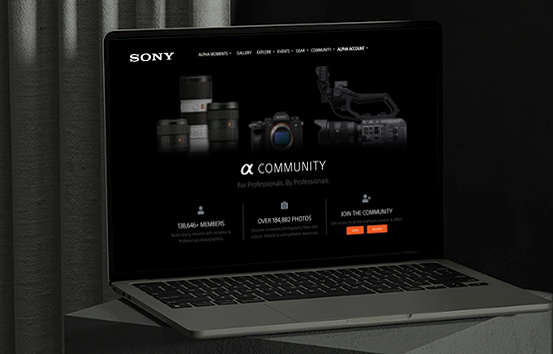
Hub for Photography Enthusiasts and Sony DSLR Owners
A scalable community platform for photography enthusiasts and Sony DSLR users, designed to support high traffic, rich media uploads, and seamless content discovery. The platform focused on performance optimization, modular development, and efficient data handling to support forums, galleries, tutorials, and user interactions without slowing down the experience.
- Modular admin panel for content and community management
- Optimized image handling and database queries for faster load times
Scalable architecture to support growing user participation
A One-Stop Shop for Seamless Movie Booking and Management
A user-friendly movie booking platform that allows users to search movies, view showtimes, and book tickets with minimal friction. The system was built to handle real-time seat availability, secure payments, and high concurrent traffic during peak booking hours, ensuring a smooth experience from discovery to checkout.
- Real-time showtime and seat availability management
- Secure booking and payment workflows
- Optimized browsing and checkout experience across devices
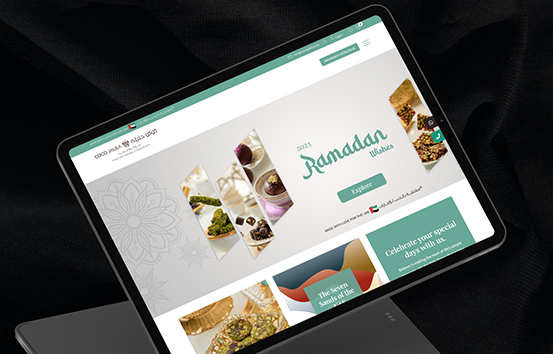
Indulge in Exquisite Artisanal Chocolates and Custom Delights
An elegant eCommerce platform for a premium artisanal chocolate brand, focused on storytelling, product presentation, and smooth purchasing journeys. The platform supports custom product collections, seasonal campaigns, and secure order processing while maintaining fast performance and a refined user experience.
- Custom product catalogs with rich visuals and descriptions
- Secure checkout and order management system
- Optimized site performance for high-quality imagery