Custom Web App Development Services Built for Scale, Security, and Performance
Updated















Our Custom Web App Development Services
Enterprise Business Solutions
Custom Application Development
Web 2.0 / 3.0 / 4.0 Websites
Backend Development
Frontend Development
DevOps Practices
Technologies: Full Stack Custom Web Application Development


Our web application development services build applications that users log in to and do work in: secure, scalable systems for complex business workflows, built full stack from discovery to deployment. The six services above say what each covers. The sections below draw the layers of a web application, compare buying, configuring and building, and set out how a build runs, the security review it has to survive, what moves the cost, what you receive and what to ask. For marketing sites and the four products sold under one name, read our web development services page.
From enterprise business solutions to DevOps practices. Counted on this page.
The back-end approach the Backend Development service above names, with third-party integrations.
Five of the technologies shown under Full Stack Custom Web Application Development above.
Per hour, depending on the seniority and mix of the team. The published Sthenos band.
On this page
- The layers of a web application
- Buy, configure or build: which one suits the process
- How a build runs, stage by stage
- The security review it has to survive
- What moves the cost of the build
- What you receive from discovery, design and handover
- What to ask a custom web application development company
- More questions before you build
- Related pages, by layer and stage
The layers of a web application, and the service that builds each
A web application, as our overview of the four kinds of web build defines it, carries authentication, data models, business logic, integrations and ongoing state. Figure 1 draws those layers and places the services on this page against them.
Figure 1. Four layers, and the service on this page that builds each
Caption: the four layers restate that overview's description of a web application: authentication, data models, business logic, integrations and ongoing state. Every service label is a tile on this page: Frontend Development, Custom Application Development, Backend Development, DevOps Practices and Enterprise Business Solutions. Nothing in the figure is a measurement.
Buy, configure or build: which one suits the process
Our custom software development page sets out three answers and the test that settles most of them, which is not technical: write down the process you are automating and ask whether a competitor could copy it and be at parity with you. If yes, buy or configure. If no, that process is the reason to build.
Three answers, and where each one goes wrong
Buy a packaged product
Best for- A process that is the same one your competitors run.
- A product that covers it without heavy configuration, at a licence cost proportionate to real use.
- Goes wrong when you pay to bend it into a shape it was never designed for.
Configure what you own
Best for- A CRM, ERP, commerce or content platform you already own, where the gap is configuration, data quality and integration.
- Goes wrong when so much custom configuration piles up that the platform can no longer be upgraded.
Build a custom one
Best for- A process that is genuinely how you compete.
- Data residency or a control framework that rules out the hosted option, or an integration surface no product covers.
- Goes wrong when you build a commodity and own its maintenance forever.
How a build runs, stage by stage
Custom Application Development above runs from discovery to deployment. These six stages are that path in full, as published on our custom software development page, with what leaves each stage. Sthenos works in two week sprints, so working software arrives every two weeks and a first production release typically lands in three to six months, as stated on our about page.
- DiscoveryThe problem, the constraints and the success criteria are mapped before a line of code, including the list of systems the software has to talk to.Written scope
- Architecture and designTechnical design: the data model, where state lives, how the system fails, how it scales and how a reviewer will verify its security posture. Interface design runs alongside it.Architecture decisions in writing
- Build, in two week sprintsWork is cut into increments that end in something reviewable rather than something described.Working software every two weeks
- ReleaseHardening, testing and a controlled release, with the rollback path decided before the deployment rather than during the incident.A controlled release
- HandoverThe repository and the cloud accounts in your name, and the operational knowledge written down in a form somebody who was not on the project can act on.Repository and cloud accounts in your name
- SupportMonitoring, maintenance and a roadmap tied to business outcomes, so you notice a problem before your customers do.Monitoring, maintenance and a roadmap
The security review it has to survive
Our penetration testing page sets out what a web application test covers, and its API test adds the interface behind it. Our custom software development page adds the design rule for the second card: security by design, not retrofitted after the build.
The reference works are OWASP's. The Web Security Testing Guide says how to test, the Application Security Verification Standard says what a control has to achieve, and the Top 10 is, by OWASP's own definition, an awareness document, so treat a proposal that offers only the Top 10 as a scope floor rather than a methodology. Our penetration testing page defines each one.
What moves the cost of the build
This work is billed at the published Sthenos rate band, and where the scope is clear we quote a fixed price for a defined outcome, with a costed roadmap before any build starts.
Within those bands, these are the drivers our custom software development page names for a build. None carries a number here, because a number without your scope attached to it is decoration.
What you receive from discovery, design and handover
The commitments that land on your side of the table in any engagement, from a written scope to the repository in your name, are published in one list. A web application adds the items below, each handed over by a stage above, as our custom software development page and the list linked here publish them.
- The list of systems the software has to talk to, drawn up in discovery.
- The control framework the contract names, and the measure that will tell you whether the build worked.
- Architecture decisions in writing: the data model, where state lives, how the system fails and how it scales.
- A security posture you can put in front of a reviewer, settled at design time.
- The operational knowledge written down, in a form somebody who was not on the project can act on.
- Infrastructure your own engineers can run: environments, pipelines, identity, monitoring and cost control.
What to ask a custom web application development company
For a shortlist of any web development company, our overview of the four kinds of web build lists its own questions. These six are for a web application, where users log in and the system holds state, and each one is already published on this site.
- Where is authorization checked: at the boundary, or only in the interface?
- Which integrations are in the first release, and is the other side of each one documented?
- Is the rollback path decided before the deployment, rather than during the incident?
- Where does the repository live, who holds the deployment credentials, and what happens to both if the relationship ends?
- Who owns the monitoring and the on-call path before the first real user arrives?
- What documentation is a contractual deliverable, rather than something you intend to write?
More questions before you build
What does a web app development company build for an enterprise?
Secure, scalable web applications that support complex business workflows, as Enterprise Business Solutions above describes: systems that streamline operations, improve collaboration and modernize customer-facing systems. Our software development services page lists the forms it takes: dashboards, portals and internal tools, built end to end.
Do you build both the back end and the front end?
Yes. Backend Development and Frontend Development are both services on this page: robust back-end systems with API-driven, microservices-based architectures and third-party integrations, and intuitive, high-performance interfaces built with modern frameworks for speed, accessibility and usability.
Can you take over a web application somebody else built?
Yes. Legacy system modernization is one of the services we sell, and taking over an existing codebase is one of the ways it starts. Send us access to the repository, or a description of the system, and we will tell you what we think it would take.
Related pages, by layer and stage
Related case study: online management and communication platform for a construction and engineering company, with role-based access and real-time updates without page reloads.
Planning a web application? Tell us the workflow it has to support, who will log in and which systems it has to connect to, and we will help you determine which of our services best fit your needs. Request a free consultation.
Selected Project Examples
Hub for Photography Enthusiasts and Sony DSLR Owners
A scalable community platform with modular admin controls, optimized data handling, and performance-focused database architecture to support high user engagement and content growth for a global photography audience.

A One-Stop Platform for Seamless Movie Booking and Management
A user-friendly web platform enabling fast movie discovery, real-time seat availability, and frictionless booking flows across devices, delivering a smooth end-to-end cinema experience.

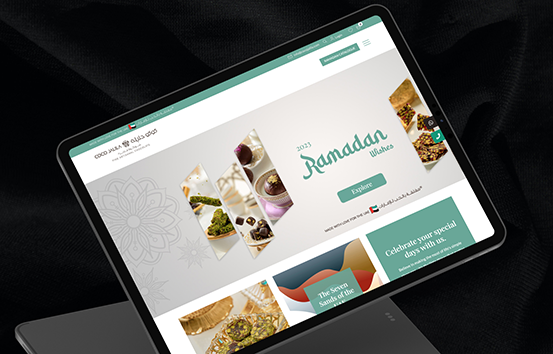
Premium E-Commerce Platform for Artisanal Chocolates and Custom Delights
A visually rich, conversion-optimized e-commerce experience showcasing premium handcrafted products, integrating secure checkout, product storytelling, and seasonal campaign scalability.